
Ma Shi Fu · Brush Trimmer at the Xuan Brush Factory
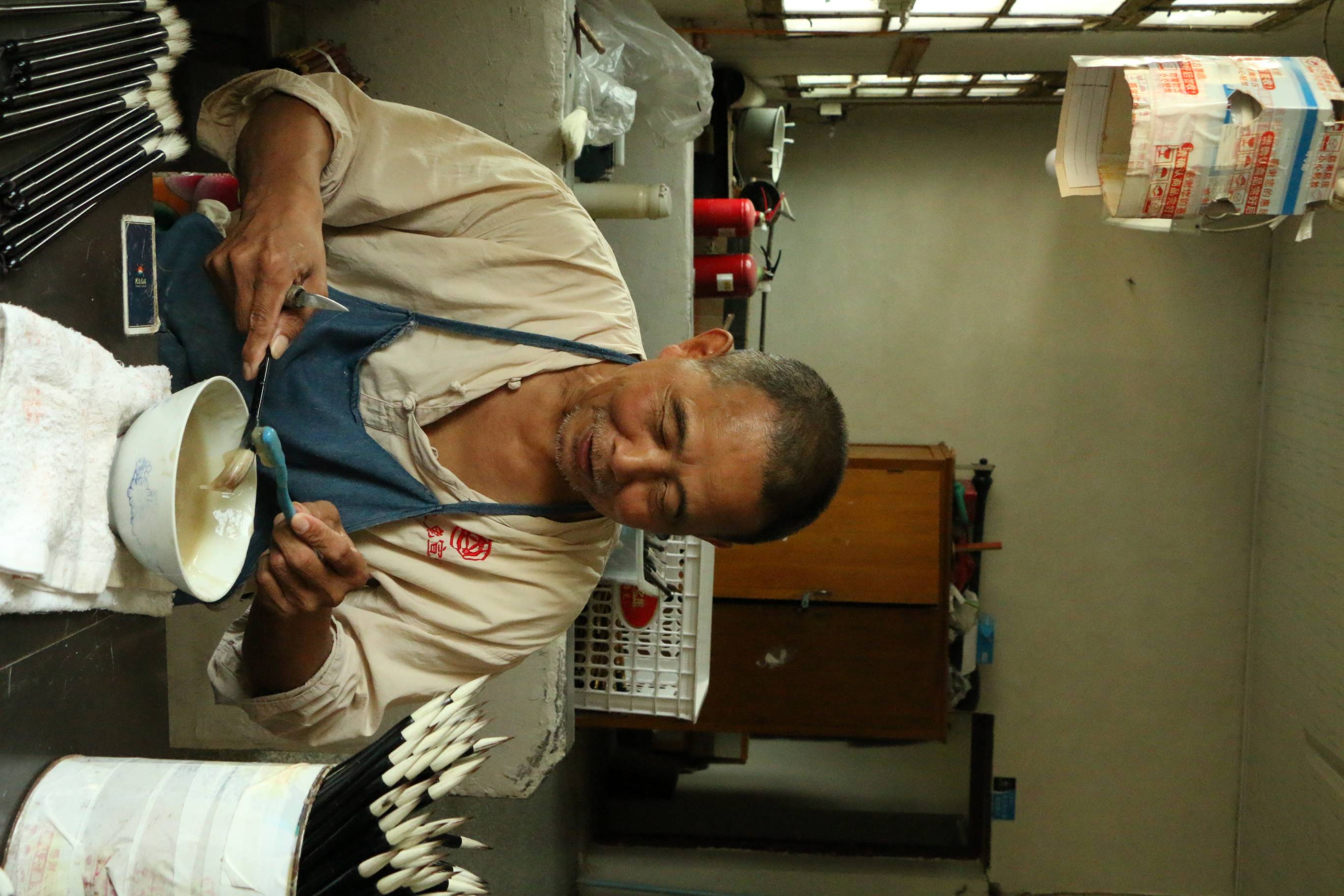
Ma Shi Fu · Brush Trimmer at the Xuan Brush Factory
Authorization · Authorized“The hardest part is picking out these hairs. If you don't pick them out, the brush won't write. There are bald hairs, uneven ones—uneven ones without tips—every one of them has to be plucked out. ”
Full transcript
《Xuan Brush Factory: Interview with Master Ma, Brush Trimmer》
Editorial note: Q = interviewer; Ma = Master Ma; Anon = anonymous interjection. In editing, I have tried to keep the original wording and cut repetition and meaningless filler. Obvious transcription errors have been restored from context.
Q: What's your surname, Master?
Ma: Ma.
Q: What year were you born?
Ma: '58.
Q: Where are you from?
Ma: Jing County, Huangcun. We used to be Anwu Township. Later the state reorganized things—like Taiping County merging with Huangshan City, and it became Huangshan City.
Q: What year did you start doing this?
Ma: '78, at 20. I started trimming brushes as soon as I came to this factory, and I've been trimming ever since.
Q: You got in through recruitment?
Ma: I had someone pull strings. Without that, you couldn't get in. My aunt was in this factory. People really had it hard then. If you didn't have someone pulling strings, you couldn't get into the factory. Back then, getting in as a worker was just too good. If you didn't have connections, you couldn't get in.
Q: Were you happy when you first got in?
Ma: Happiest when I first got in. My leg's bad; I can't do much. This job doesn't require getting wet.
Q: How many people in your family?
Ma: Just me.
Q: You never married?
Ma: No. I support myself.
Q: Back in the '70s, getting into a factory—people were willing, right?
Ma: Willing to marry you. Now factory work isn't popular. Before, like my father's generation in the '70s, everyone said being a worker was great. How much did workers earn before? I got 12 yuan a month. Back then it was 12 yuan. A village cadre—only cadres got thirty yuan a month. Cadres only got thirty. It's different now.
Q: What about prices then?
Ma: Pork was 7 mao 3 a jin. Dried tofu was 2 fen a piece. Back then 30 yuan was still enough to live on.
Q: Your leg—was it an injury or?
Ma: Polio. It's gone now. The state gave vaccines, a sugar pill. It's gone now.
Q: Can you walk?
Ma: I can walk, with a cane.
Q: Do you think this work is good?
Ma: You see my work—it's very simple. One piece is 5 mao. I do 100 pieces a day. This work is too dry. They make 3,000; I make less than 2,000.
Q: So you earn a bit less?
Ma: Right, a bit less. They say doing this—mainly I think it's because you don't have to get wet, as long as you can go down there. Winter isn't cold either, so no problem. The thing is, the materials can't get wet; you can't soak them.
Q: How much per piece for trimming?
Ma: 5 mao a piece.
Q: Does size matter?
Ma: Size matters. Medium is 5 mao, large is 7 mao, small is 4 mao, and there's 3 mao. 3 mao a piece—that's the very smallest, 30 centimeters. We do over 30.
Q: What's the standard for trimming well?
Ma: If you trim badly, the shaft is warped, and you can't fix it. If the head or shaft is warped, it's warped.
Q: After all these years, what do you think is the hardest part? If you took an apprentice, what would you teach as the most important thing?
Ma: The most important is picking out the hair. If you don't pick it out, the brush won't write—there are bald hairs, uneven ones, uneven ones without tips. All have to be plucked out.
Q: The knife in his hand—he has to pick out the ones inside too, otherwise it splits when you write?
Ma: Right, if you don't pick them out, it splits. You pick out the ones sticking out, the useless hairs, the ones without tips—bald-headed hairs—you have to pick them out. So when we make brushes, your eyes must be good. Your eyes absolutely have to be good. If they're not, it won't do. You can't have presbyopia. Because the master has years of experience—he touches it with his hand and knows which hair is useless.
Q: After a day of this, what part of your body gets especially tired?
Ma: Neck and lower back. Neck and lower back get tired. My hands go numb too. Winter and summer are about the same.
Q: Can you still do it now?
Ma: Can't do it now, can't see. My eyes are bad. Need glasses. I'm not used to wearing glasses. Sometimes I look once and don't see, twice; sometimes three times. Presbyopia—yes, I'm presbyopic now. That's how it is.
Q: Get some reading glasses and wear them.
Ma: Not used to wearing them.
Q: Planning to stop next year?
Ma: Next year I can't do it, can't do it. My neck is affected, my neck hurts, my lower back hurts too.
Q: Do you stand up and walk around after going home at night?
Ma: Yes, I walk. Walking helps, helps a lot. After dinner at night, sometimes I walk; sometimes after dinner I don't go, then I walk.
Q: When you're not working, what do you listen to?
Ma: Listening—it affects the electricity quality. I don't watch at night. No TV now. I don't like TV. I look at my phone. News, Douyin.
Q: There's not much waste in this, is there?
Ma: Waste is okay, not much. We've done it for decades. Brush trimming has waste—there's waste in trimming. It gets wasted. He might trim it badly.
Q: Are you the only brush trimmer here?
Ma: Used to be. There used to be thirty-some brush trimmers. Now I'm the only one left. Their factory used to have over 200 workers, 200-some people, nearly 300. It used to be big.
Q: It really was a big factory.
Ma: Yeah, it used to be big.
Q: You trim the brushes so beautifully. You make them so beautifully yourself. Are you happy when you look at them?
Ma: I'm happy when I look at them. Mainly because there are also calligraphers, painters—as long as they're happy, that's fine. Right, as long as they're happy.
Q: If they'd actually had you do water-basin work?
Ma: Water basin won't work. My leg's bad. Water's over here, and there's a basin. You pour water from a basin; you have to carry the water yourself. And there's no helper. No, no.
Q: You boil the glue yourself too?
Ma: I boil it myself. They don't know how. If you can't trim brushes, you can't boil glue.
Q: Roughly, you just glue this on first, then scrape it off, then use a tool, pull it out with a string?
Ma: Right, right. There were tools too, but they're gone now. You dig out this head and weld it with glue. Is it gone now? You don't even have this machine? It's gone now, gone. Now after this is done, the boss does it, then welds it. Do you check whether it's done well? Not just whether it's done well—done well.
Q: Do you write yourself?
Ma: Ha, I don't write. I don't write, I'm not literate. In the '50s not many people went to school, not like now when every kid has to go. I don't write, but I can tell at a glance whether a brush is good or not. Even though I don't write, whether a brush is good, easy to write with—I can tell at a glance.
Q: You glue it together—it looks the same to me.
Ma: They're all the same at first. If not, when he writes—at the start of writing—I can tell at a glance in someone's factory that some brushes won't write. Even without opening it, you can tell.
Q: They all generally think the brushes their factory makes are good?
Ma: Of course. This is the biggest brush-trimming factory.
Q: Your shafts are brought in from outside?
Ma: Brought in from outside. The heads—you make them yourselves? Yes, we used to make them ourselves.
Q: Now your factory has so few people. How many brushes can you produce a year?
Ma: They don't have that big a sales volume. You'd have to ask the boss. Such a big place, year after year.
Q: They say this is ICH?
Ma: This ICH—he says it's ICH. The boss is ICH; I'm not ICH. Oh, the boss is ICH.
Q: Master, you're ICH too.
Ma: The boss's daughter trims brushes; they trim brushes.
Q: Machines really can't do this?
Ma: Machines can't. Why can't machines? When a machine trims the hair, if you don't pick them out, it can't write. The machine can't pick them out. Time—it can't pick them out. This hair—I know it's shed. This hair—doesn't it have seams? This one doesn't. The fine hair doesn't have seams. This doesn't count as seams either; you can't see it. Sometimes an apprentice isn't qualified yet. The most important thing is picking out the stray hairs, picking them out.
Q: Do you usually talk with them?
Ma: Sometimes I talk with you. Whether a brush can be trimmed, butting it together. Butting it together, right. If it's not even, it writes off-center.
(Inheritor: This is our brush-trimming craft. You want little kids to experience this brush-trimming craft. Our glue is the kind of agar weed you hang on the wall—seaweed from the sea. Kelp. Agar weed is a cold dish. As a cold dish, it contains a lot of starch. After soaking in clear water and boiling over high heat for two hours, it turns into glue. Some people think it's paste, but it's not. Paste is white. When this is boiled down, it's this—this pale yellow. See, the agar weed is hanging there. Because, first, it doesn't damage the hair—animal hair—it doesn't damage it. Also, it makes it easy for us to open. Some brushes bought on the market have to be soaked in water for eight hours, two hours, one hour, before opening. We don't. We just open them directly. That simple. So we—mainly our shaping can't... if you use industrial glue, you definitely have to soak it in boiling water first, because like our hair, once scalded with boiling water, it curls. That's how it is.
Tour group: So this is in the trimming, shaping our brush?
Inheritor: A brush has the Four Virtues: sharp, even, round, and resilient. If it lacks a sharp tip—if it isn't sharp—what happens when you write? It splits. If it's round—if it isn't round—it writes off-center. There are many reasons a brush writes off-center or splits, but we sum them up as the Four Virtues: sharp, even, round, resilient. If it lacks one, it won't do. It won't do missing even one. So this has to be trimmed well. You see, every brush of ours is round and sharp, and when we open it, the first line is even. If the first line isn't even, it will write off-center too. This is the last step. This is our brush trimming—well, not exactly the last step. After the brush is trimmed and dried, you can use it, but we still can't sell it retail, because we're... Then we'll be going, Master.
Ma: Okay, okay. You're busy. Okay, okay. Thanks.
Inheritor: He emphasized the brush, saying it doesn't damage the hair and is easy to open, using glue boiled from seaweed-type agar weed to shape the brush. He also described the brush-trimming process.
Q: The restaurant owner we just ate at—he used to make brushes too?
Ma: Yes, the restaurant one. He said he made brushes for over 20 years, over in Taohuatan. He used to be at our factory; he came out of our factory. They used to apprentice in our factory, did it over 20 years, about that.)
Q: Do young people learn now?
Ma: No one learns now. No one. Now the boss learns himself. There are no young people. Kids all go to school, so no one's here. In our rural areas, it's all old people at home. The ones who work—basically those in their forties and fifties—all work outside; those in their thirties and forties all work outside.
Q: Are the brushes bought outside all synthetic hair?
Ma: The brushes bought outside are all synthetic hair. Ours—whatever people say—the hair is all animal hair, natural animal hair. Now most outside are synthetic.
Q: The boss's wife is also a boss?
Ma: The boss's wife is a boss too, also a boss.
Original Chinese transcript
《宣笔厂 修笔工马师傅访谈录》
整理说明:问=采访者;马=马师傅;旁=旁人插话。整理时尽量保留原话,删除重复和无效口语;对录音中明显识别错误处,按上下文恢复。
问:师傅贵姓?
马:姓马。
问:哪一年生的?
马:58年。
问:是哪里人?
马:泾县的,黄村的。以前我们是安吴乡,后来国家改制,就像太平县跟黄山市合并起来了,变成黄山市。
问:哪一年做这个的?
马:78年,20岁。到这个厂就开始搞修笔,一直搞修笔。
问:当时是招工进来的?
马:托人进来的。没托人不得进厂。我姑妈在这个厂。那时候人真的不容易,那时候人都不找人,那进厂当工人好太好了。那时候不找人,就不得进厂。
问:最开始进厂高兴吗?
马:最开始进厂最高兴。腿不方便,什么事都不能做。这个不需要沾水。
问:家里有几个人?
马:家里就我一个。
问:你后面没成家?
马:没有啊,自己养自己。
问:以前70年代进工厂,应该还有些人愿意吧?
马:愿意结婚啊。现在好像在工厂不热。以前像我爸爸他们70年代,在工厂都讲当工人好得很。以前打工的好多钱?我12块钱一个月。那时候是12块钱。一个村干部是干部了才这30一个月,干部才30一个月。现在不同了。
问:那时候物价呢?
马:猪肉7毛3一斤,干子是2分钱一块。那时候30块钱还是可以生活了。
问:你这个腿是受了伤还是?
马:小儿麻痹。现在没得了。国家那个打疫苗,吃了个糖丸。现在都没得了。
问:走路能走吧?
马:能走,托拐棍走。
问:你觉得这事可好?
马:你看我这个事,很简单。这个做一次5毛钱,一天做100单。干这个事太干了。他们干3000,我这2000不到。
问:就是钱要少一点?
马:哦,钱要少一点。他们讲干这个事,主要讲的可能是觉得只要不沾水,只要下去就好。冬天也不冷,就没什么问题。就是东西不要水,不要泡了,不要泡水的。
问:你做修笔一单多少钱?
马:一单5毛钱。
问:跟大小有关系吧?
马:有大小有关。中号5毛,大号7毛,小号4毛,还有3毛的。3毛钱一次,这是最最小的了,30公分的。我们要30多。
问:修笔修得好的标准是什么?
马:你修不好,他的杆子都变形,他那个就修不好,头子杆了变形,就变形。
问:你觉得搞这么多年,你感觉最厉害的是什么?如果你带徒弟,你要教他,你觉得你搞得最厉害的是什么?
马:最厉害的你这个毛挑出来。你这个毛不挑出来,你这个笔不能写字,就是秃秃的毛,还有不齐的,不齐的没有锋颖的,全部要剃出来。
问:师傅他手上那一把刀,要把里面这个也把它挑出来,不然写字之后它会开叉了?
马:对,不挑出来它会开叉的。就挑里面呲出来的,没有用的毛,没有锋颖的,就秃头的,秃头的毛,要把它挑出来。所以说我们做毛笔眼神一定要好,眼神必须要好,眼神不好都不行,都没有老花眼。因为师傅他多年的经验了,他一就是手一摸,他就知道那一根毛,那根毛肯定是没有用的。
问:一天搞下来,身上哪个地方特别累?
马:累颈椎腰椎,颈腰椎也累。手也有麻,手也麻。冬天夏天都差不多。
问:现在还能干吗?
马:现在干不了了,看不懂了。眼睛看不懂,伤眼睛了,就上眼睛啊。戴眼镜我没戴的习惯。有时候一次没看明两次,有时候看明三次。老花,对对对,我都老花,我现在是老花了。就这样子。
问:你搞个老花镜戴着。
马:戴不习惯。
问:准备明年不干了?
马:明年不能干不能干。这颈椎有影响,颈椎也痛,腰椎也有痛。
问:晚上回去再站起来走走路啊?
马:有啊走路啊,走走路要好一点,好多了。吃完晚上吃完饭走,有时候吃晚饭有时候不去了他就走。
问:你在这都不搞东西的时候,听点什么?
马:听到是这样的,不都是听到的影响这个电的质量。晚上不看,现在没电视,电视又不喜欢看,看手机。看看新闻啊,看抖音。
问:这搞这个没有什么浪费的东西吧?
马:浪费还好,没有什么浪费。像我们做了几十年了,毛笔就浪费,只要修图的就有浪费,修图就有浪费,就浪费了。他可能就是修坏了。
问:这个地方就你一个修笔的?
马:以前是,我这个是以前有三十几个修笔,现在就成了我一个了。他们家原来厂里有两百多个工,两百多人,小三百人。以前是大。
问:以前真是个大厂。
马:哎,以前是大。
问:你这个笔修得这么漂亮,你自己搞的这么漂亮,自己看了可高兴啊?
马:自己看了高兴。主要的因为还有书法家了,书法家画家,也得开心就行。哦就他们开心就行了。
问:你当时要是真的让你做那个水盆工?
马:做水盆不行。腿不方便嘛。水在这边,还有一个盆,一个盆倒水呀,要自己端水呀。还没有一个小工。没有没有。
问:那你这个胶也是自己熬吧?
马:自己熬。他们都不会熬嘛,不会修笔就不会熬胶。
问:大概晓得这个有,就你这个一下子呢,就是把它先粘上,然后把它刮掉,然后搞个那个搞手,搞线把它拉出来?
马:对对对,还有的工具,还有工具现在没得了。给这个头子挖出来一个胶水焊接起来。那现在没有吗?这个你这个机器都没得?现在没有,现在没得了。现在这个做完了,这个老板在搞,再焊接。是不是看一下子做的好不好?不是看做的好,做的好。
问:你自己写字吗?
马:哈哈我不写字,不写字,不识字。50年代那个时候念书的就不多啊,不像现在小孩子都要上学。人不写字,但看了毛笔好用不好用,一看就晓得。虽然不写字,但是笔好不好,好写不好写,一看就晓得了。
问:像你把它这个用胶搞起来了,我看它都一样的。
马:全部都是,这个是一第一次是一样的。不一样的他写,这一开始就写字。我在人家厂里一看,有些笔就写不出来,一看就看得出来。就是不搞开你就看得出来,看得出来。
问:他们普遍都觉得自己厂生产的笔好?
马:肯定的啊,他们这个是最大的修笔厂。
问:你这个笔杆都是外面进来的吧?
马:外面进的。笔头就是你们自己做?对,以前是自己干的。
问:那你们现在厂就这么几个人,一年能生产多少笔啊?
马:他不是没有那么大的销量,那你要问老板哈。这么大一片场地,这一年一年的。
问:他们讲这个是非遗啊?
马:这非遗他说是非遗。老板是非遗,我不是非遗。哦老板是非遗啊。
问:师傅也是非遗。
马:老板的姑娘是修笔,他们是修笔。
问:这个这个事情机器真的搞不了啊?
马:机器做不了。为什么机器做不了?机器修这个毛,你不挑,就不能写字,你机器就挑不出来,时间关系挑不出来。这个毛我晓得是脱的,这个毛呢,这个毛不有缝吗?这个没得,这个毛细的那个有没没缝啊。这个也不算有缝啊,那你看不出来。有时候学徒还不够格。这个你这个最最重要的就是翘毛,给毛翘出来。
问:那你平时跟他们可讲讲话?
马:有时候跟你讲话,跟讲讲话。来修笔可以不可以,顶在一起。顶在一起对吧,顶的不齐,写字就偏锋。
(传承人:这个是我们修笔工艺。这个你要小的小朋友啊,体验这个修笔工艺。我们的就是胶,就是挂在墙上的那种石花菜,就是海里面的海藻海藻。海带,石花菜就凉拌菜。凉拌菜因为它里面含大量的什么淀粉,它那个清水泡发以后啊,大火熬两个小时,就是变成那个胶。有的人以为这个是什么,是浆糊不是。浆糊它是什么?它是白色的,但是这个酱熬成它就是这个,就这个淡黄色的。你看他那个那个石花菜就挂在那,石花菜。因为它的嘛,一个就是不伤毛,因为我的毛动物毛它不伤毛。还有个呢,它方便我们打开。就是有的市面上他买的那个毛笔要水泡8个,泡两个小时啊,泡一个小时啊打开。我们不用,我们就直接打开就行了。这么简单啊。所以说我们,嗯主要还是我们冻膜它不能就是啊,粘我们的工业胶粘工业胶的话,你一定要开水泡泡它以后,因为我们像我们头发一样,开水一烫,它卷起来了。是这样的。
参观团问:那这个就在修理在修,把我们笔定型?
传承人:我们一支毛笔它的就是那个四德叫尖圆齐健。就每一个就是你少了一个尖,你如果你不尖,你写字会什么?你就会开叉。如果圆的话你写字,你不圆呢,它就会啊会偏锋。是这样的。因为我们写字偏锋开叉有很多种原因,但是我们就是把它合并起来叫尖圆齐健叫四德。如果说你少了一个就不行,少了一个都不行。那这个要把修理好。你看我们每一支笔都是圆的尖的,然后我们打开了第一个平行线是平的。啊如果说你第一个平行线不是平的,你写字也会偏锋。这是最后一道。这个是我们修笔的,也不是说最后一道,就是我们这笔修好晒干了以后呢,你可以使用的,但是我们还不能零售,因为我们是。那师傅那我们先走了。
马:好好好,你在忙啊。好好好,好的谢谢。
传承人:强调毛笔的,称其不伤毛且方便打开,用海藻类石花菜熬成的胶定型毛笔。此外介绍了修笔工艺。
问:刚才吃饭那个饭店的老板,他以前也是做毛笔的?
马:对,饭店那个。他说他做了20多年的毛笔了。在桃花潭那边。他以前在我们厂里去的,他以前是从我们厂里出去的,他们以前在我们厂里学徒的,做20多年,差不多。)
问:现在年轻人学吗?
马:现在也没得学了,现在没人学了。现在老板自己学。现在年轻人都没有,人家小孩子都上学了,就没有人在这。像我们农村里面都是老人在家,打工的基本上四五十人都在外面打工,三四十人都在外面打工。
问:在外面买的笔都是人造毛?
马:在外面买的笔都是人造毛。我们采的不按个人说的,他的毛就是全部是动物毛,天然的动物毛。现在外面大部分都是人造毛。
问:老板娘也是老板?
马:老板娘也是老板,也是老板。
Machine translated, corrections welcome